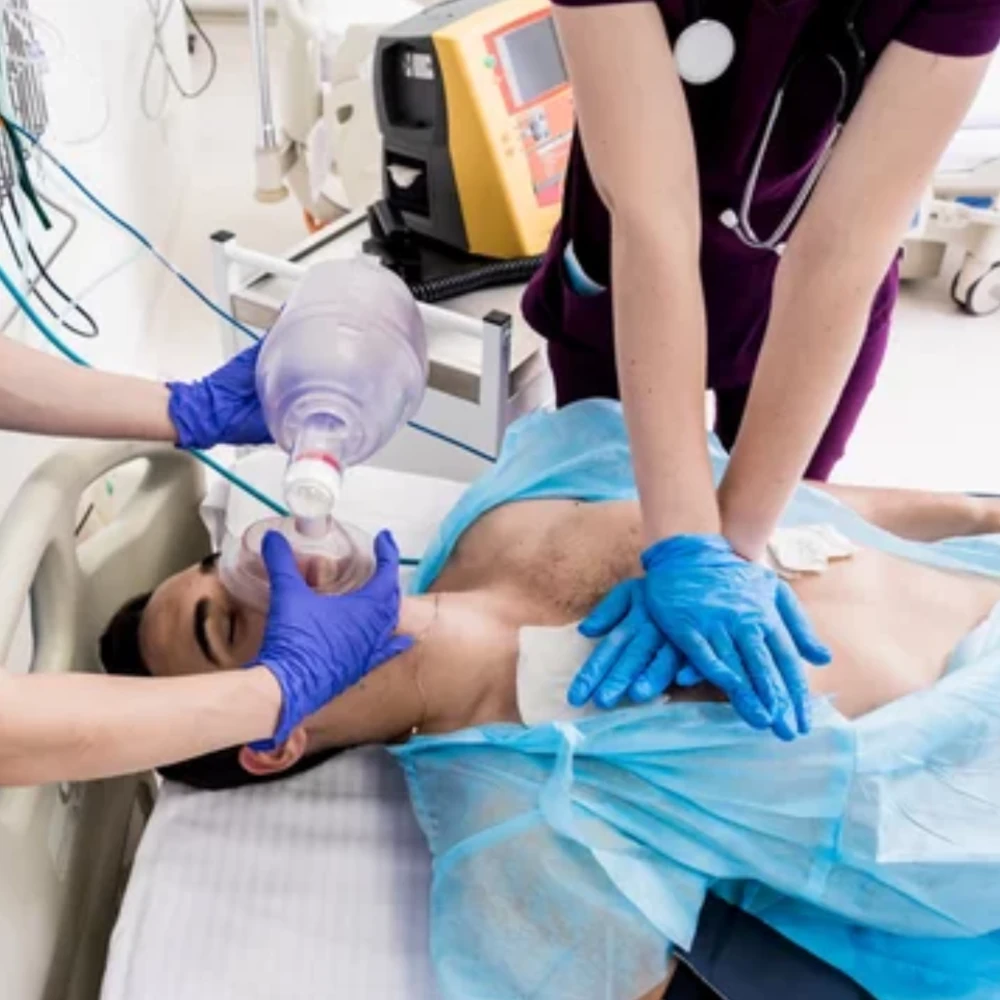
2.1 Training content
- CPR/AED – General public
- Introduction to CPR
- Approach and primary survey
- Life-threatening emergencies (angina, stroke, opioid overdose)
- Chest compressions
- Ventilations
- Defibrillation
- Special cases
- Downloading a mobile app
- Demonstration – Single-rescuer adult CPR sequence
- Practice – Single-rescuer adult CPR sequence
- Demonstration – Single-rescuer child CPR sequence
- Practice – Single-rescuer child CPR sequence
- Demonstration – Single-rescuer infant CPR sequence
- Practice – Single-rescuer infant CPR sequence
- Airway obstruction
- Airway clearance in the Adult, Child, and Others
- Airway clearance in the Infant
- Conclusion
2.2 Training objectives
Introduction to CPR
- Know the content and objectives of the training
- Awareness of the importance of CPR maneuvers
- Know the most recent national guidelines on CPR and emergency cardiac care
- Know the various causes of cardiac arrest
- Awareness of angina and stroke
- Quickly recognize the type of victim in order to provide the best care
Approach and primary survey
- Recognize hazards and respond effectively
- Reduce stress in the event of a potential intervention
- Learn techniques for checking level of consciousness
- Confirm the presence or absence of effective breathing
- Confirm the presence or absence of a carotid pulse (health-professional specific)
- Learn the various approaches to care based on age, carotid pulse, and breathing
- Recognize a victim in respiratory arrest (apnea)
- Recognize a victim in cardiopulmonary arrest and apply the correct intervention techniques
Life-threatening emergencies — Angina / Chest pain
- Understand and recognize the signs and symptoms
- Learn the proper intervention techniques
- Interpret a clinical situation and intervene
Life-threatening emergencies — Stroke
- Understand and recognize the signs and symptoms
- Learn the proper intervention techniques
- Interpret a clinical situation and intervene
Life-threatening emergencies — Opioid overdose
- Understand and recognize the signs and symptoms
- Learn the proper intervention techniques
- Interpret a clinical situation and intervene
Chest compressions
- Proper techniques for adults, children, and infants
- Risks and precautions depending on the victim
- Importance of compression quality
- Compliance with the latest national standards
Ventilations
- Proper techniques for adults, children, and infants
- Mouth-to-mouth ventilation, pocket mask, or face shield
- Various ventilation devices available
- Compliance with the latest national guidelines
Defibrillation (AED)
- Recognize when to use an AED
- Safe and effective use of the AED
- Recognize the risks associated with AED use
- Special considerations for infants
Special cases
- Various possible approaches to care
- Reasons why ventilations may be optional during cardiac arrest
- Minimum legal responsibilities of the first responder
- Ensure rescuer safety at all times
Mobile app
- Discover a tool that can assist a rescuer in a real emergency situation
- Use the app during practice sessions in training
- Reinforce learning through an interactive audio-visual tool
Demonstrations and practice — CPR (adult, child, infant)
| Population | Demonstration | Practice |
|---|
| Adult | Learn the proper CPR techniques with AED — know the complete sequence according to the latest national guidelines | Master a complete single-rescuer intervention for an adult victim in cardiac arrest, according to the latest guidelines |
| Child | Learn the proper CPR techniques with AED for children — know the complete sequence according to the latest national guidelines | Master a complete single-rescuer intervention for a child victim in cardiac arrest, according to the latest guidelines |
| Infant | Learn the proper CPR techniques for infants — know the complete sequence according to the latest national guidelines | Master a complete single-rescuer intervention for an infant in cardiac arrest, according to the latest guidelines |
Airway clearance — Adult, Child, and Others
- Learn the guidelines and proper airway clearance techniques for a conscious or unconscious adult and child victim
- Learn the proper techniques for victims of different body types, conscious or unconscious
- Be able to apply airway clearance techniques for a person suffering from airway obstruction
Airway clearance — Infant
- Learn the guidelines and proper airway clearance techniques for a conscious or unconscious infant
- Be able to apply airway clearance techniques for an infant suffering from airway obstruction
Conclusion
- Awareness of continuing education and the importance of refreshing CPR skills
Actual course structure — modules and lessons
Introduction to CPR
- Training Goals - CPR
- Statistics, survival curves
- Intervention using the C-A-B technique (chest compressions, airway, breathing)
- The different approaches to care based on age
- Risk factors
- Angina and its complications
- Patient categories
- Stroke
The approach and primary assessment
- Assessing a scene
- Level of consciousness
- If the victim is conscious and needs to take medication
- Assessing breathing and pulse
- The different care approaches by age
- The recovery position
Life-threatening emergencies
- Angina and cardiac pain
- Stroke
- Opioid overdose
Chest compressions
- Compressions in adults
- Video - Adult Chest Compressions
- Compressions: some special cases
- Chest compressions in a child
- Video - Chest compressions in a child
- Chest compressions on an infant
- Video - Infant Chest Compressions
- Continuous compressions
- Duty cycle
- Mechanical chest compression devices
- Summary of chest compressions
Ventilations
- Update — COVID-19
- Rescue breaths
- Video - Adult Ventilations
- Video - Child Ventilations
- Ventilation in infants
- Video - Infant ventilations
- Mouth-to-mouth
- Ventilation devices
- Rescue breathing
- Assisted ventilation
Defibrillation
- Defibrillation in adults
- Defibrillation in children
- Defibrillation in the infant
Downloading a mobile app
- Downloading a mobile app
- Video - Mobile App
Demonstration - One-rescuer CPR sequence in an adult
- Medical intervention on an adult with 1 rescuer
- If the victim is breathing and has a pulse
- If the victim has ineffective or absent breathing and has a pulse
- If the victim is not breathing and has no pulse
- Using the defibrillator on an adult victim
- Continuing the sequence in the adult victim
- Video - One-rescuer CPR sequence in an adult
Practice - One-rescuer CPR sequence in an adult
- Preamble - Practising CPR on an Adult
- Video - Practising the single-rescuer adult CPR sequence
Demonstration - One-rescuer CPR sequence in a child
- Medical intervention on a child with 1 rescuer
- If the child is breathing and has a pulse >60 bpm
- If the child presents with ineffective or absent breathing and has a pulse >60 bpm
- If the child is not breathing and has no pulse (or a pulse <60 bpm)
- Using the defibrillator on a child victim
- Continuing the sequence in the child victim
- Video - One-rescuer CPR sequence in a child
Practice - One-rescuer CPR sequence in a child
- Preamble - Practicing CPR on a child
- Video - Practicing the one-rescuer child CPR sequence
Demonstration - One-rescuer CPR sequence in an infant
- Medical intervention on an infant with 1 rescuer
- If the infant is breathing and has a pulse >60 bpm
- If the infant has inadequate or absent breathing and a pulse >60 bpm
- If the infant is not breathing and has no pulse (or a pulse <60bpm)
- Video - One-rescuer infant CPR sequence
Practice - One-rescuer CPR sequence in an infant
- Preamble - Practising CPR on an infant
- Video - Practicing the one-rescuer infant CPR sequence
Airway clearance in adults, children and others
- Clearing the Airway in the Adult and Child
- Video - Clearing the airway in adults and children
- Clearing the airway in a victim seated in a wheelchair
- Airway clearance in a pregnant woman
- Video - Airway clearance in a pregnant woman
- Clearing the airway in an obese victim
- Clearing the airway in a large victim
- Video - Clearing the airway in a large-bodied victim
- Clearing your own airway
Airway clearance in an infant
- Clearing the airway in an infant
- Video - Airway clearance in an infant